OtisONE and our predictive maintenance platform represent the most advanced connected elevator monitoring system in the vertical transportation industry. Real-time diagnostics, proactive fault resolution, and continuous performance optimization — all managed remotely before problems reach your passengers.
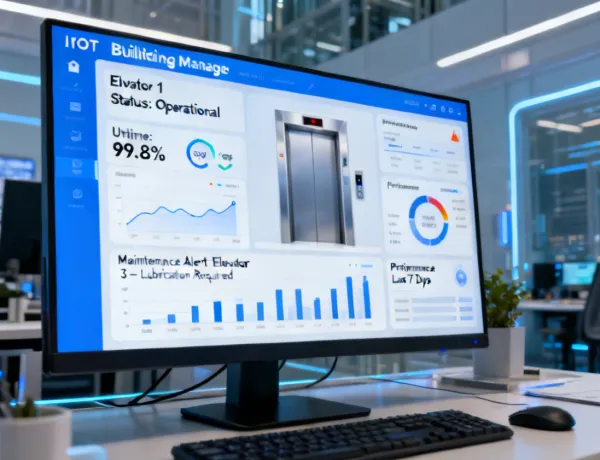
OtisONE connects your elevators to a global monitoring network that watches over 300,000 data points per elevator, per day. Machine learning algorithms detect degradation patterns weeks before they cause passenger disruption — enabling our technicians to resolve faults during scheduled visits rather than emergency call-outs.
300,000+ data points per elevator per day — door operation, motor temperature, vibration, rope tension, and 40+ additional parameters monitored continuously.
Proprietary ML models trained on 170 years of maintenance data identify degradation signatures up to 4 weeks before a potential failure event.
Real-time status view, planned maintenance schedule, service history, and performance analytics accessible via web browser or the Otis mobile app.
When OtisONE detects an issue requiring on-site attention, it automatically dispatches the nearest certified technician and notifies your building manager.
All Otis maintenance contracts include certified technicians, genuine Otis parts, and full compliance documentation. Premium tiers add OtisONE connectivity and uptime guarantees.
Scheduled preventive maintenance visits, lubrication, adjustments, and emergency call response.
Essential coverage plus OtisONE remote monitoring and extended emergency response hours.
Maximum protection with guaranteed uptime SLA, dedicated technician assignment, and full parts coverage.
Based on independently published building operations benchmarks and contractual performance data across our global service portfolio.
| Performance Metric | Otis Premium + OtisONE | OEM Service (No IoT) | Independent Contractor | In-House Maintenance |
|---|---|---|---|---|
| Typical Uptime SLA | 99.9% (contractual) | 95–98% (best-effort) | 93–97% (varies by contract) | No formal SLA |
| Emergency Response Time | 2 hours (guaranteed, major metros) | 2–4 hours (typical) | 2–6 hours (varies by region) | Depends on staffing |
| Fault Detection Method | Predictive — ML flags issues up to 4 weeks early | Reactive + scheduled PM | Reactive + scheduled PM | Reactive only |
| Energy Optimization | Up to 75% reduction with ReGen Drive™ | 15–30% with standard drives | No optimization tools | No optimization tools |
| Parts Warranty | Genuine Otis parts, full labour included (Premium) | Genuine OEM parts, labour separate | Aftermarket parts; warranty varies | Procurement risk on end-user |
| Cybersecurity Framework | Encrypted, air-gapped control logic, ISO 27001-aligned | Varies by OEM | Typically not addressed | End-user responsibility |
| Annual Cost (indicative) | 15–30% premium over independent | 10–20% premium over independent | Baseline reference | High fixed staffing cost |
Data sources: Otis Global Service Operations Report 2023; BOMA International Elevator Benchmarking Survey 2022; KONE Service Performance White Paper 2021. Annual cost comparison reflects mid-rise commercial buildings (10–30 floors, 3–6 elevator units) in North American markets. Actual figures vary by market, contract scope, and building profile.
We believe in transparency about what our technology can and cannot do. Understanding these boundaries helps you set realistic expectations and plan appropriate contingencies.
The 2-hour guaranteed emergency response time applies to major metropolitan markets where Otis maintains a dense local service network. In secondary cities and rural areas, response commitments are typically 4–8 hours. Buildings in remote or developing markets should evaluate regional service capacity before committing to a Premium SLA contract.
OtisONE's ML models are trained on patterns from existing Otis-brand equipment. Predictive accuracy is highest on Otis Gen3 and Gen2 series units installed after 2010. For legacy equipment installed before 2000, or non-Otis units transitioned to Otis service, the system operates in a reactive monitoring mode until sufficient baseline data is established (typically 6–12 months). The 50% callback reduction benchmark applies specifically to OtisONE-enabled Otis equipment.
The 75% energy reduction figure represents the maximum achievable under optimal conditions: high-utilization buildings (100+ trips/day per elevator), buildings with compatible power infrastructure for energy return, and units operating at or near rated load capacity. Low-rise residential buildings or lightly used elevators typically see 20–40% energy reduction, not 75%. We recommend a building-specific energy audit before projecting savings in your operating budget.
Modernization is not always the right answer. Equipment that has experienced structural shaft damage, severe corrosion of guide rails, or outdated shaft dimensions incompatible with current cab sizing requirements may require full replacement. An Otis assessment will always identify when modernization is technically feasible — but we recommend obtaining an independent structural engineer's opinion for equipment over 35 years old before committing to a modernization path.
The 99.9% contractual uptime guarantee excludes downtime caused by vandalism, misuse, force majeure events, building power outages beyond Otis's scope, or third-party construction work affecting the elevator shaft or machine room. It also excludes the first 30 days of a new Premium contract (baseline establishment period). Building owners should review their SLA schedule of exclusions carefully when calculating expected availability.
The 12–20 week installation window for a single mid-rise elevator reflects conditions where building permits are in place and shaft construction is complete. Delays in permit approval (common in dense urban jurisdictions), structural modifications required to accommodate MRL configurations, or discovery of asbestos in older machine rooms can extend timelines significantly. Otis provides contingency scheduling, but owners should build a 25–30% schedule buffer when planning tenant or operations commitments around elevator availability dates.
Our service consultants will review your current maintenance history and identify opportunities to reduce unplanned downtime and operating costs.